Creative technology.
AI tools, XR experiences, interactive installations, real-time visuals, and technical systems where the idea and execution need to work together.
Judging / Review / Mentorship
Yiting Liu is available for judging, critique, mentorship, and portfolio review across AI, XR, immersive experiences, wellness technology, creative tools, and cultural programming. She brings the perspective of a maker who has shipped work, mentored emerging technologists, produced rooms, and built systems that have to make sense to real audiences.

MIT
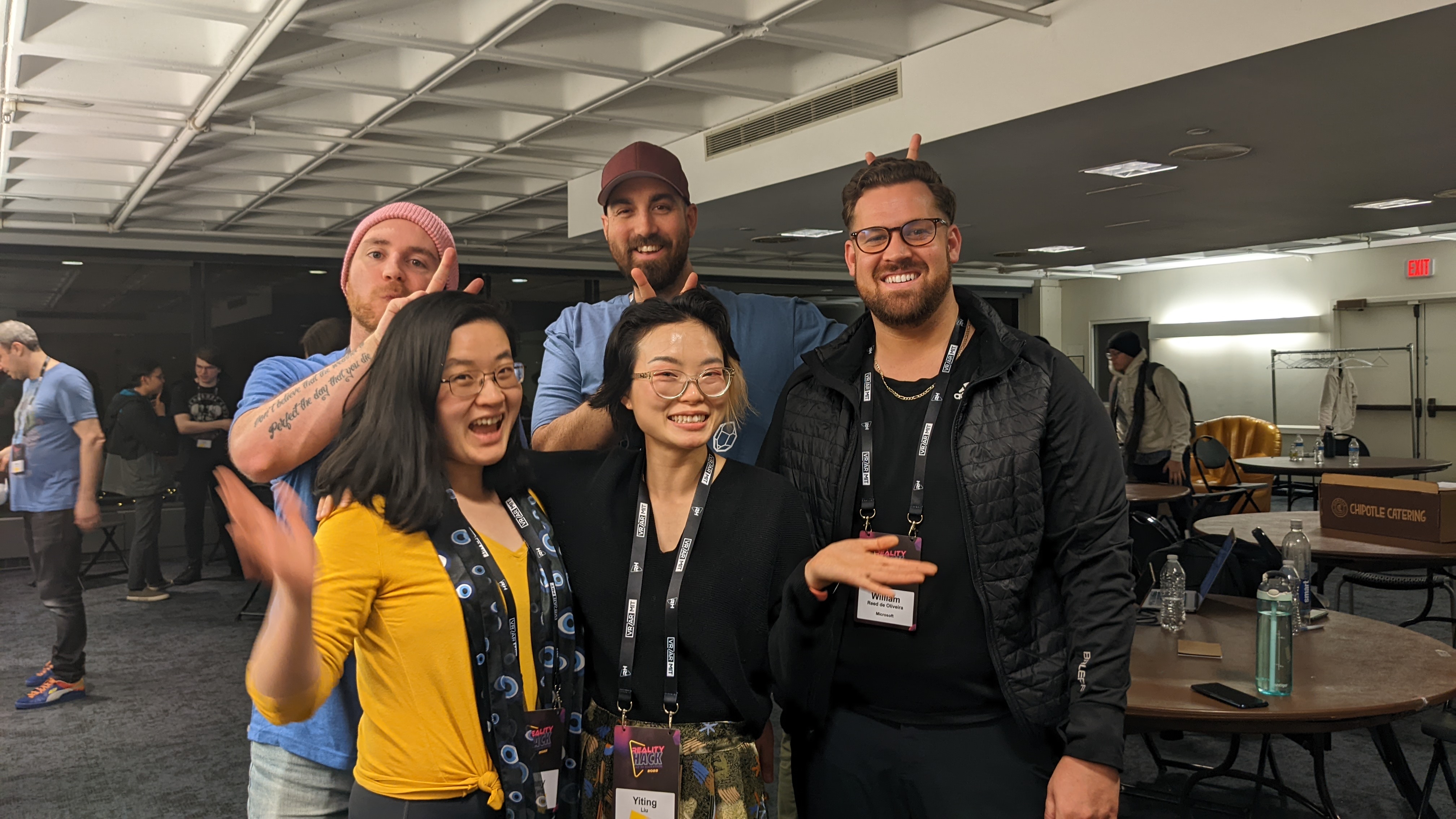
Reality Hack Wellness Prize winner; mentor in 2025
NYU
ITP alum and coding mentor, 2020-2021
F500
immersive work for CAMP (Disney), ESPN, Citibank, Comcast
300+
attendees gathered through Future of NYC Design
Bio for programs
Yiting Liu is a Creative Technology Director creating technology-powered experiences that bring people together across community, interactive, and immersive formats. Her immersive work has supported Fortune 500 clients including CAMP (Disney), ESPN, Citibank, and Comcast.
She won the MIT Reality Hack Wellness Prize for LifelinesAR, an AR therapy installation, and later returned to MIT Reality Hack as a mentor in 2025. At NYU ITP, where she received her graduate degree, she supported students as a coding mentor from 2020 to 2021. Her current work spans sponsorship-backed events, gallery installations, live visual systems, and creative technology for brands building distinctive presence.
As a judge or reviewer, Yiting is especially useful for programs that need someone who can evaluate both the emotional clarity and the technical reality of a project: what the work means, who it serves, how well it is made, and whether the story around it is strong enough to travel.
Judging capabilities
I am strongest when the work crosses disciplines: creative concept, technical execution, audience experience, emotional impact, and the story a team needs to tell afterward.
AI tools, XR experiences, interactive installations, real-time visuals, and technical systems where the idea and execution need to work together.
Brand activations, gallery installations, spatial storytelling, live visual systems, and public-facing experiences designed for real people in real rooms.
Human-centered prototypes that involve emotion, reflection, care, ritual, therapy-adjacent tools, or sensitive experiential design.
Student, founder, artist, and designer portfolios where the work needs sharper framing, clearer outcomes, and a stronger public story.
Events, conferences, festivals, sponsorship-led programs, and community platforms that need taste, curation, audience fit, and a reason to matter.
Early-stage creative products, AI-native tools, and technical demos where usefulness, originality, and go-to-market clarity all matter.
Evaluation lens
The best work has a clear reason to exist. It can be experimental, imperfect, or early, but it should know what it is trying to change for the person encountering it.
Good fit
Judging inquiries
Include the program name, review format, date, expected time commitment, judging criteria, number of projects, and whether feedback is public, private, written, or live.